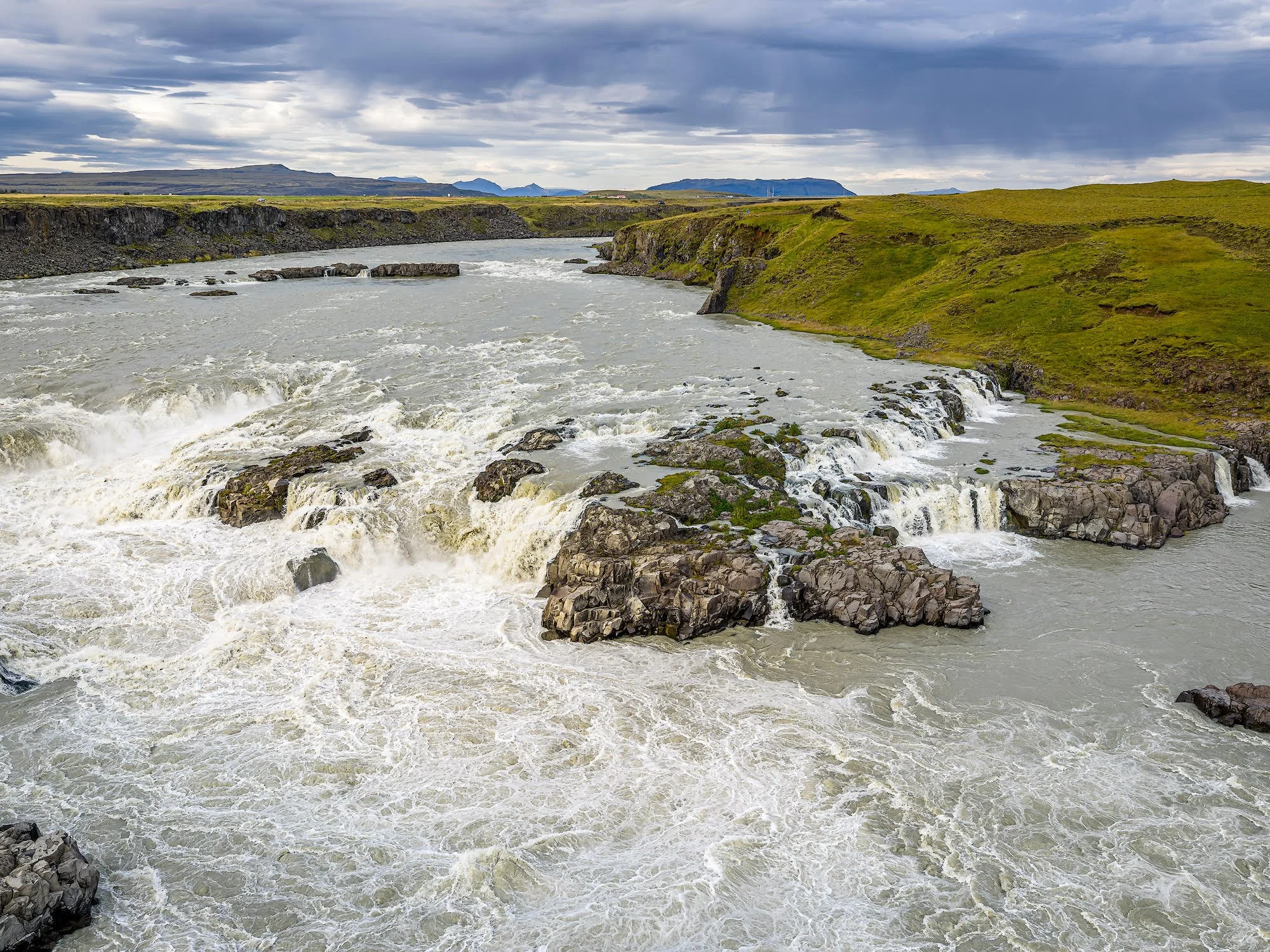
Some places speak for themselves, while others make more sense if you uncover a bit about their history and geology. We’d argue that Urriðafoss falls into the latter category: the more you know, the more this place is going to appeal. So before you get here and see it for yourself, let’s tell you a bit about Urriðafoss and, in a country that boasts so many waterfalls, why it’s unique.
The history of Urriðafoss
Urriðafoss itself gets its first mention in the Icelandic history books in 1604. However, the most significant event in its recent history took place in 1927. Then, permission was granted for a hydroelectric power plant. Renewable energy is an important contributor in Iceland, and across the country such electricity taps into the power of other rivers.
The Fossafélagið Títan (Titan Waterfall Company) considered the Þjórsá as a potential spot for a project that, had it gone ahead, would have submerged Urriðafoss. It was an ambitious proposal, one that also envisioned a railway link to Reykjavik.
But – fortunately for anyone who wants to appreciate Urriðafoss in all its unspoilt glory – the plans never came to fruition and the power plant was never built. They had permission and even carried out surveys, but in the end, they couldn’t raise the necessary capital. More recently, the idea of constructing a power plant has resurfaced; for now, the site is safe.
How is Urriðafoss different to other Icelandic waterfalls?
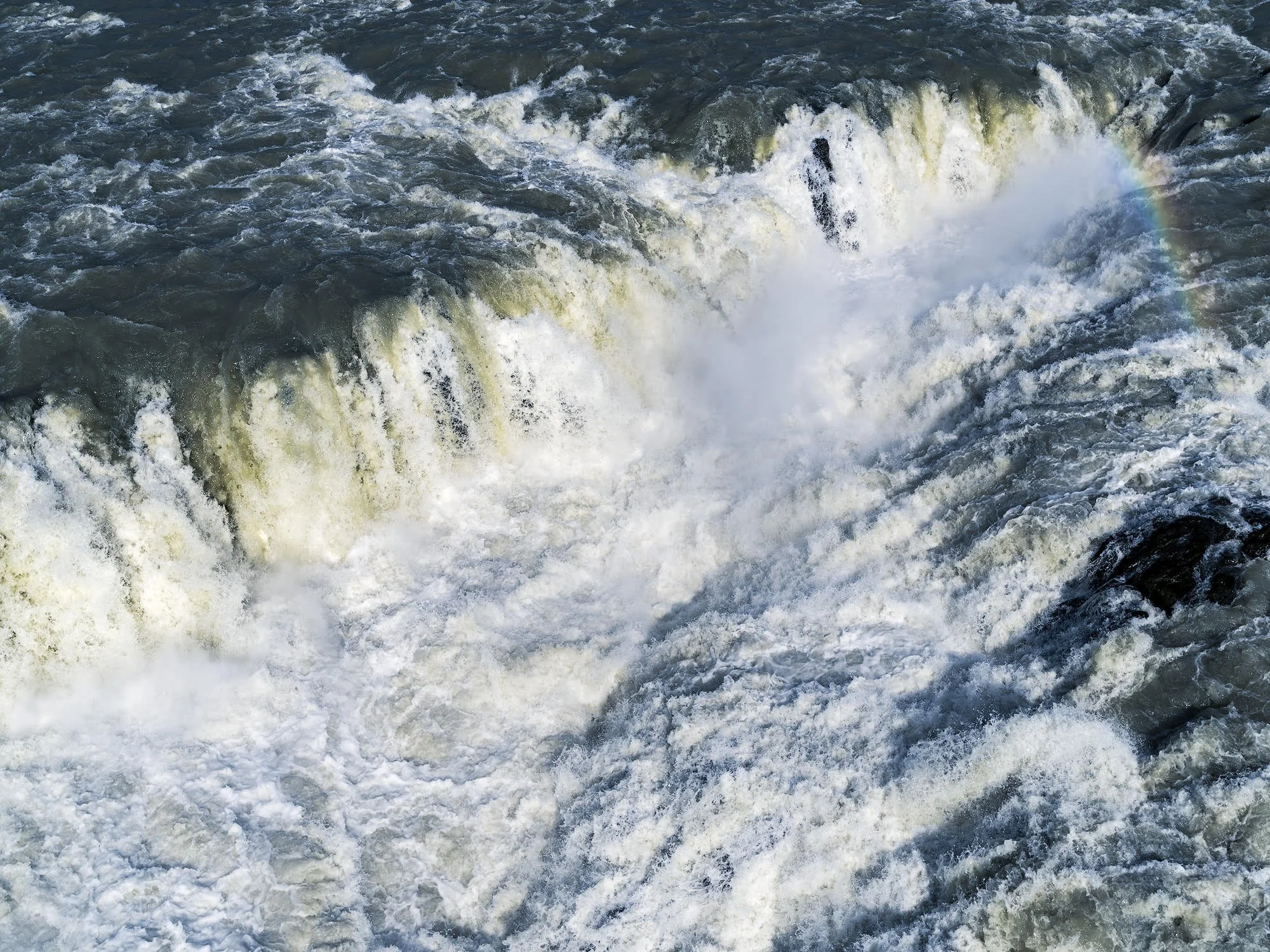
Today, Urriðafoss remains unique: a broad cascade that measures around 20 feet (6 meters) high and perhaps six or seven times wider than that. But it is the amount of water falling over the rock that sets it apart: this is one of Iceland’s most voluminous waterfalls with an average flow rate of approximately 95000 gallons per second (360 cubic meters per second). In Iceland, only the River Ölfusá can rival this amount of water.
And it’s this alone that drives many in-the-know visitors to come. Slowly tourists are becoming more aware of Urriðafoss, though for now it remains a hidden gem. Those that make it to the viewing platform are wowed by its power and charmed by its untamed character. Whether you come to fish or simply admire its beauty, you’ll be glad you slotted Urriðafoss waterfall into your South Iceland plans.
What’s in a name?
Urriðafoss sits on the Þjórsá River. At 143 miles (230km) long, this is Iceland’s longest river. Its source is found in the highlands at the Hofsjökull Glacier, from where the water makes its long journey to the coast via barren Sprengisandur. Eventually, it empties out into the Atlantic Ocean about 15 minutes’ drive east of Stokkseyri.
Break the name Urriðafoss in half and once translated, you’ll see why it got its name. According to the Old Icelandic dictionary, urriða – or aurriða as it was once more commonly spelled – translates as salmon-trout. Couple this with foss, which means waterfall, and you have a literal description of what to expect. Today, this attracts keen anglers, who come to Urriðafoss to fish for wild salmon.
Understanding the geology of Urriðafoss
Throughout Iceland’s settled period and long before that time, volcanoes have shaped the landscape of this island nation. Around 8600 years ago, the Veiðavötn volcanic system in the central highlands erupted, ejecting what experts believe could be the largest effusive lava flow to have occurred on the planet since the time of the last Ice Age.
The result? What we now know as the Þjórsárhraun (or Great Þjórsá Lava), a vast lava field that spans an area of about 375 square miles (970 square kilometres). A river of runny, molten magma traveled for 87 miles to reach the Atlantic Ocean, spilling out to fill in valleys and obliterate anything that stood in its path. This cataclysmic event would alter the terrain forever.
Even when this mighty river of lava reached the cold sea, it kept moving, creating the submerged Skerjagarður reefs over which you’ll see the waves break if you head down to Stokkseyri. Today, nature is still changing the basalt bedrock. Over the centuries, moss and vegetation have colonized the bare lava and of course, the Þjórsá River itself is also steadily eating away at it.